Why India Chose the Rafale Over Russia's Su-57: A Strategic Shift in Fighter Jet Procurement
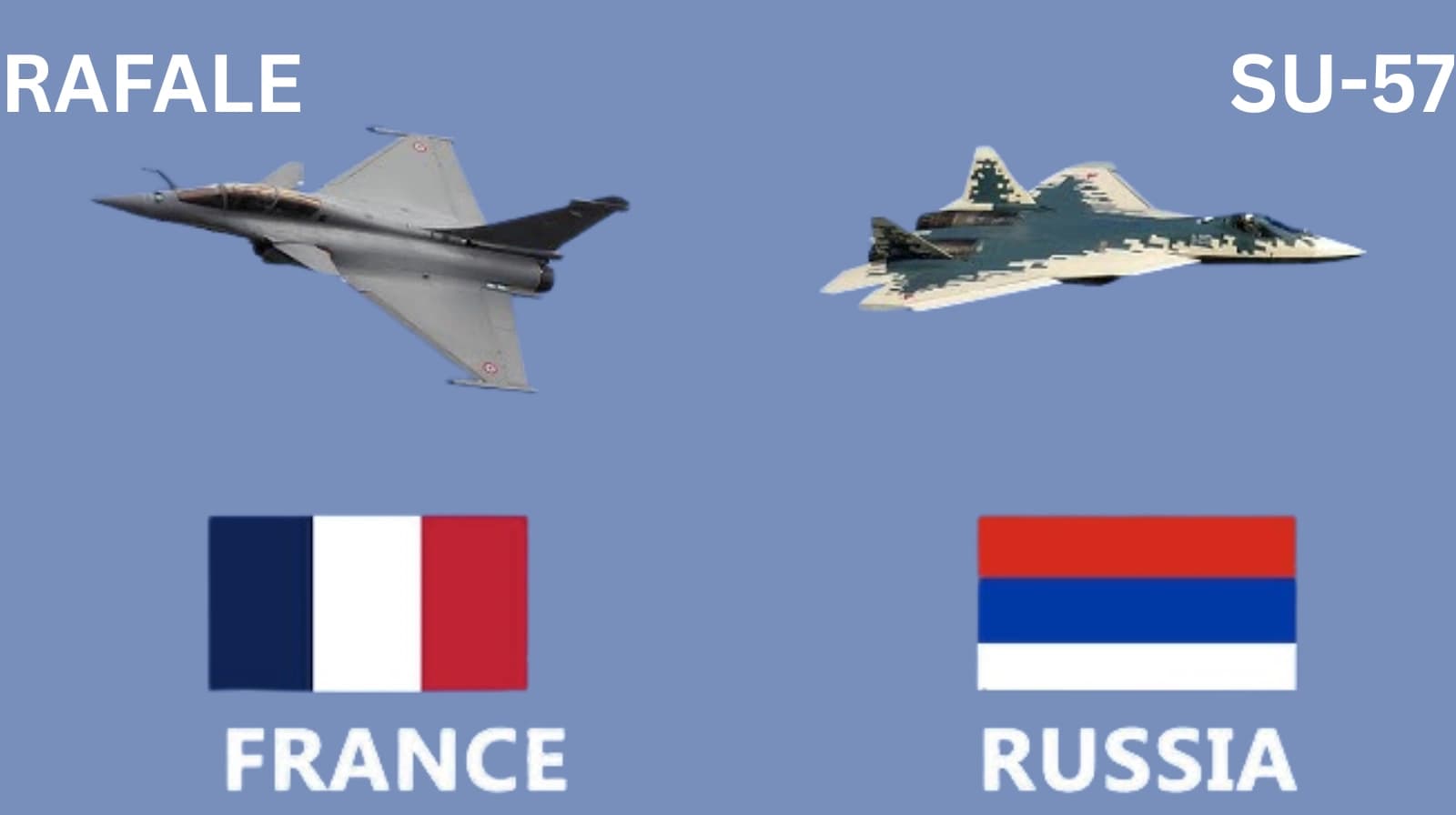
India’s choice of the French Dassault Rafale over Russia’s Su-57 reflects a strategic shift driven by operational readiness, proven combat performance, geop
India's decision to procure the French Dassault Rafale fighter jet instead of pursuing the Russian Sukhoi Su-57 represents a pivotal moment in its defense strategy. While the Su-57 is marketed as a fifth-generation stealth fighter with advanced capabilities, India ultimately favored the Rafale—a 4.5-generation multirole aircraft—for a combination of technical, operational, geopolitical, and logistical reasons. This choice came after India initially collaborated with Russia on the Su-57 under the Fifth Generation Fighter Aircraft (FGFA) program but withdrew in 2018. As of early 2026, India is advancing plans to acquire additional Rafales, potentially up to 114 more jets in a deal worth around $39 billion, effectively sidelining the Su-57 and other competitors.
Background on the Procurement Process
The roots of this decision trace back to India's Medium Multi-Role Combat Aircraft (MMRCA) competition in the early 2010s, aimed at acquiring 126 fighters to modernize the Indian Air Force (IAF). The Rafale emerged as the winner based on life-cycle costs, including acquisition, operations, and technology transfer. Negotiations stalled over costs and local production by Hindustan Aeronautics Limited (HAL), leading to a scaled-down deal for 36 Rafales in 2016. Meanwhile, India partnered with Russia on the FGFA, a customized version of the Su-57, investing nearly $300 million. However, India exited the program in 2018 after demanding over 40 changes to address deficiencies in the aircraft's engine, stealth features, and weapon systems.
Russia has since made renewed offers for the Su-57, including technology transfer and lower costs (potentially half the Rafale's lifecycle expense), positioning it as a fifth-generation alternative. Despite this, India has leaned toward expanding its Rafale fleet, with 36 already in service and 26 naval variants ordered, bringing the potential total to 176.
Key Reasons for Choosing Rafale Over Su-57
1. Technical Maturity and Proven Performance
The Rafale is a battle-tested platform with a mature ecosystem, having seen action in conflicts like Libya, Mali, and Syria. In contrast, the Su-57 is still underdeveloped, underfunded, and not a high priority for Russia, with limited production (only about 20 operational units as of 2025). Indian evaluations highlighted weaknesses in the Su-57's stealth (its radar cross-section is larger than true fifth-gen peers like the F-35 or J-20), engine reliability, and sensor fusion.
The Rafale's advanced features, such as its AESA radar, Spectra electronic warfare suite, and integration with long-range missiles like the Meteor, give it an edge in multirole operations. Its high serviceability rate (around 90%) outperforms even the F-35. Notably, during India's "Operation Sindoor" in 2025—a skirmish with Pakistan—the Rafale demonstrated superior electronic warfare capabilities against Chinese-supplied PL-15 missiles and air defenses, reinforcing the IAF's confidence.
While the Su-57 boasts supercruise, internal weapon bays, and high maneuverability on paper, its real-world stealth and survivability remain unproven in contested environments.
2. Geopolitical and Strategic Considerations
India is diversifying its defense partnerships amid Russia's ongoing war in Ukraine, which has led to sanctions disrupting supply chains and spare parts for existing Russian aircraft like the Su-30MKI and MiG-29. This has made further reliance on Russian platforms "progressively untenable," as logistical challenges mount. France offers greater strategic autonomy without the political strings attached to U.S. or Russian deals, such as U.S. export controls on the F-35 or Russia's inconsistent technology sharing.
India's "Make in India" initiative also favors the Rafale, with provisions for local assembly and technology transfer, aligning with self-reliance goals. In contrast, past FGFA talks faltered over insufficient technology transfer and high costs.
3. Cost and Lifecycle Economics
Although the Su-57 is touted as cheaper (around $50-60 million per unit vs. Rafale's $200-300 million including weapons and support), the Rafale's lower lifecycle costs—factoring in maintenance, spares, and uptime—make it more economical long-term. The IAF already operates Rafales, reducing training and integration expenses. Su-57 procurement would require building new infrastructure amid Russia's production delays.
4. Operational Fit for IAF Needs
The IAF requires versatile fighters for air superiority, ground strikes, and electronic warfare against threats from China and Pakistan. The Rafale excels in these roles, while the Su-57's hybrid design trades stealth for maneuverability, potentially making it less ideal for India's high-altitude border operations. With squadron strength dropping to 29 (below the needed 42), India prioritizes quick induction of reliable aircraft over developmental ones.
Counterarguments and Russian Perspectives
Some analysts argue the Su-57 offers better value as a true fifth-gen jet, with superior speed, range, and potential for upgrades. Russian sources claim it outperformed Western jets in combat simulations and could remain relevant for decades. However, these views are often seen as biased, and India's experience with Russian delays (e.g., in Su-30MKI upgrades) has eroded trust.
Future Implications
By opting for more Rafales, India is deepening ties with France while reducing dependence on Russia, which supplied 60% of its arms pre-2022 but now faces competition. This aligns with indigenous efforts like the AMCA fifth-gen project, expected by 2035. While the Su-57 remains an option in theory, current trends suggest India's skies will be guarded by Rafales for the foreseeable future.
AI Model Verification
Sources Verified
Cross-referenced with multiple web sources
Integrity Reviewed
Content safety and quality checks passed
Fact-Checked
Verified by Buzz Insights AI protocols
Real-time Processing
Generated with latest available data